Description
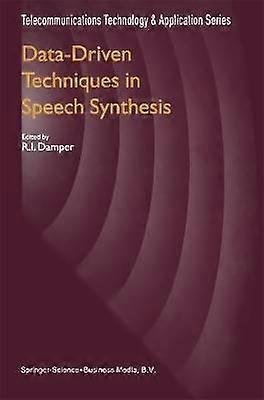
Data-Driven Techniques in Speech Synthesis
1 Learning About Speech from Data: Beyond NETtalk. - 1. 1 Introduction. - 1. 2 Architecture of a TTS System. - 1. 3 Automatic Pronunciation Generation. - 1. 4 Prosody. - 1. 5 The Synthesis Module. - 1. 6 Conclusion. - 2 Constructing High-Accuracy Letter-to-Phoneme Rules with Machine Learning. - 2. 1 Introduction. - 2. 2 The Nettalk Approach. - 2. 3 High-Performance ML Approach. - 2. 4 Evaluation of Pronunciations. - 2. 5 Conclusions. - 3 Analogy the Corpus and Pronunciation. - 3. 1 Introduction. - 3. 2 Why Adopt a Psychological Approach?. - 3. 3 The Corpus as a Resource. - 3. 4 The Sullivan and Damper Model. - 3. 5 Parallels with Optimality Theory. - 3. 6 Implementation. - 3. 7 Corpora. - 3. 8 Performance Evaluation. - 3. 9 Future Challenges. - 4 A Hierarchical Lexical Representation for Pronunciation Generation. - 4. 1 Introduction. - 4. 2 Previous Work. - 4. 3 Hierarchical Lexical Representation. - 4. 4 Generation Algorithm. - 4. 5 Evaluation Criteria. - 4. 6 Results on Letter-to-Sound Generation. - 4. 7 Error Analyses. - 4. 8 Evaluating the Hierarchical Representation. - 4. 9 Discussions and Future Work. - 5 English Letter-Phoneme Conversion by Stochastic Transducers. - 5. 1 Introduction. - 5. 2 Modelling Transduction. - 5. 3 Stochastic Finite-State Transducers. - 5. 4 Inference of Letter-Phoneme Correspondences. - 5. 5 Translation. - 5. 6 Results. - 5. 7 Conclusions. - 6 Selection of Multiphone Synthesis Units and Grapheme-to-Phoneme Transcription using Variable-Length Modeling of Strings. - 6. 1 Introduction. - 6. 2 Multigram Model. - 6. 3 Multiphone Units for Speech Synthesis. - 6. 4 Learning Letter-to-Sound Correspondences. - 6. 5 General Discussion and Perspectives. - 7 TreeTalk: Memory-Based Word Phonemisation. - 7. 1 Introduction. - 7. 2 Memory-Based Phonemisation. - 7. 3 tribl and TreeTalk. - 7. 4 Modularity and Linguistic Representations. - 7. 5 Conclusion. - 8 Learnable Phonetic Representations in a Connectionist TTS System I: Text to Phonetics. - 8. 1 Introduction. - 8. 2 Problem Background. - 8. 3 Data Inputs and Outputs to Module M1. - 8. 4 Detailed Architecture of the Text-to-Phonetics Module. - 8. 5 Model Selection. - 8. 6 Results. - 8. 7 Conclusions and Further Work. - 9 Using the Tilt Intonation Model: A Data-Driven Approach. - 9. 1 Background. - 9. 2 Tilt Intonation Model. - 9. 3 Training Tilt Models. - 9. 4 Experiments and Results. - 9. 5 Conclusion. - 10 Estimation of Parameters for the Klatt Synthesizer from a Speech Database. - 10. 1 Introduction. - 10. 2 Global Parameter Settings. - 10. 3 Synthesis of Vowels Diphthongs and Glides. - 10. 4 Stop Consonants (and Voiceless Vowels). - 10. 5 Estimation of Fricative Parameters. - 10. 6 Other Sounds. - 10. 7 Application: A Database of English Monosyllables. - 10. 8 Conclusion. - 11 Training Accent and Phrasing Assignment on Large Corpora. - 11. 1 Introduction. - 11. 2 Intonational Model. - 11. 3 Classification and Regression Trees. - 11. 4 Predicting Pitch Accent Placement. - 11. 5 Predicting Phrase Boundary Location. - 11. 6 Conclusion. - 12 Learnable Phonetic Representations in a Connectionist TTS System II: Phonetics to Speech. - 12. 1 Introduction. - 12. 2 Architecture of Phonetics-to-Speech Module. - 12. 3 Training and Alignment. - 12. 4 Phonetics-to-Speech Results. - 12. 5 Conclusions and Further Work. Language: English
-
Identifiant Fruugo:
337856600-741515254
-
ISBN:
9781441947338
Livraison & retours
Expédition dans un délai de 6 jours
Expédition de Royaume-Uni.
Nous mettons tout en œuvre pour que les produits que vous commandez vous soient livrés dans leur intégralité et selon vos indications. Néanmoins, si vous recevez une commande incomplète, des articles différents de ceux commandés ou si, pour toute autre raison, la commande ne vous satisfait pas, vous pouvez retourner la commande ou tout produit inclus dans celle-ci et recevoir un remboursement complet des articles. Voir l'intégralité de la politique de retour